Industries We Serve

Precision measurement solutions deployed across six continents, supporting mission-critical applications from cellular network rollouts to defense system validation and automotive EMC compliance.

Global Coverage by Application
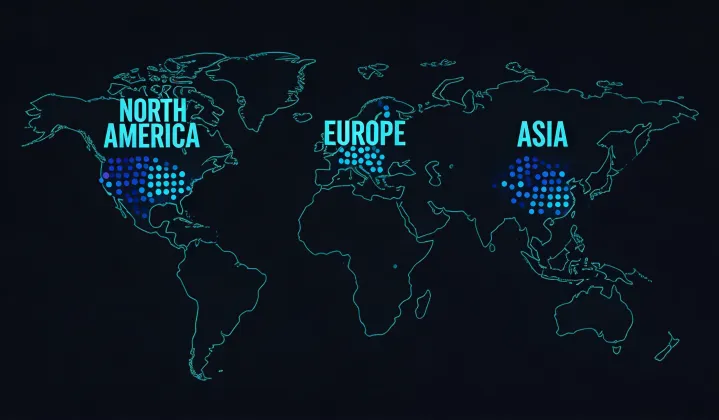
Global Deployment Map

North America

FCC compliance, 5G mmWave deployment, defense EW test systems

32 countries

Europe

CE RED certification, automotive EMC, ETSI conformance

28 countries

Asia Pacific

TELEC testing, semiconductor wafer-level characterization

24 countries

Rest of World

Spectrum monitoring, carrier network deployment support

11 countries

Industry Application Details

Telecommunications

Comprehensive 5G NR and LTE-Advanced test solutions covering base station transmitter verification, receiver sensitivity testing, and over-the-air radiated performance measurements. Handheld spectrum analyzers for field interference hunting and cell site verification across sub-6 GHz and mmWave bands.

Aerospace & Defense

Radar cross-section measurement systems, electronic warfare signal environment simulators, and SIGINT receivers covering DC to 90 GHz. MIL-STD-461 EMI test systems and MIL-STD-810 qualified portable instruments for field deployment in austere environments.

Automotive EMC & Connectivity

CISPR 25 conducted and radiated emissions test systems. ISO 11452 immunity testing. V2X (C-V2X, DSRC) communication protocol analysis. EV powertrain EMI characterization at voltages up to 1,000 V DC with specialized high-voltage probes and current clamps.

Semiconductor & Research

On-wafer S-parameter characterization from DC to 110 GHz using automated probe stations. Pulsed IV/RF measurements for GaN and SiGe device modeling. Load-pull and source-pull systems for PA design optimization. Multi-port mixed-signal characterization for complex SoC devices.

Wireless Device Certification

Automated regulatory compliance test sequences for FCC, CE RED, ISED, and TELEC certification. Wi-Fi 6E/7, Bluetooth 5.4, UWB, and NB-IoT/LTE-M conformance test suites. Integrated test chambers with path loss calibration and antenna pattern measurement.

Spectrum Monitoring & Management

Fixed and mobile spectrum monitoring stations for regulatory authorities. Direction-finding receivers for interference source localization. Spectrum occupancy databases supporting dynamic spectrum access and TV white space management.

Applicability Boundaries & Selection Considerations

No single instrument platform covers every measurement scenario. Understanding these boundaries ensures you select the right tool for your specific application.

Frequency Coverage Limits

Our benchtop spectrum analyzers cover 5 Hz to 90 GHz. Applications requiring continuous coverage above 90 GHz — such as sub-THz channel characterization for 6G research at 140 GHz or 300 GHz — require external harmonic mixing extensions and dedicated waveguide components, which introduce additional measurement uncertainty of 1-3 dB depending on the harmonic number.

Environmental Operating Range

Standard benchtop instruments are specified for +5°C to +40°C at ≤80% relative humidity. Field deployment in extreme environments (desert, arctic, high-altitude) requires MIL-STD-810 qualified portable variants, which trade some measurement bandwidth and dynamic range for environmental resilience. Always verify the specific operating temperature derating curves for your deployment conditions.

Real-Time Bandwidth vs. Dynamic Range

Real-time analysis at 800 MHz bandwidth operates with a noise floor approximately 10-15 dB higher than narrow-band swept analysis of the same frequency span. For applications requiring both wide instantaneous bandwidth and maximum sensitivity — such as detecting weak spurious emissions near strong carriers — a multi-pass measurement strategy combining real-time capture with narrow-band verification is recommended.

Calibration Interval Dependencies

Published specifications assume calibration within the stated interval (typically 12 months). Instruments operated in high-vibration, high-temperature-cycle, or continuous-duty environments may drift faster. Our Enterprise Care service includes usage-based calibration interval optimization using historical drift data to balance measurement confidence against calibration cost.

Have a Unique Measurement Challenge?

Our industry specialists understand the regulatory, technical, and operational context of your specific application.

Discuss Your Application